Elevate at 21c: Heather Bennett and Michael Drummond
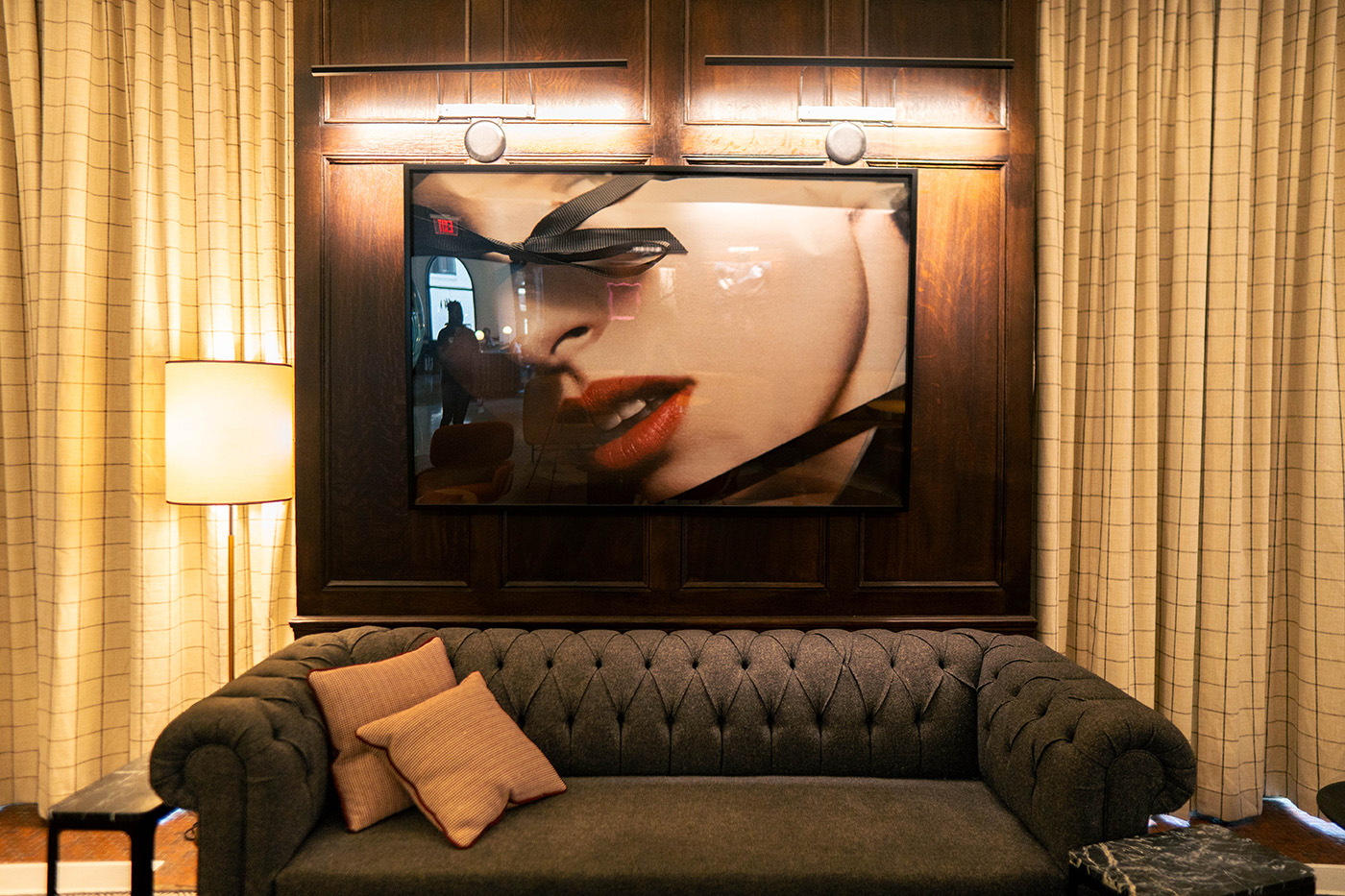
- Heather Bennett, Ref Stevie Shirt for JLM, 2018. Image courtesy of the artist and Bruno David Gallery
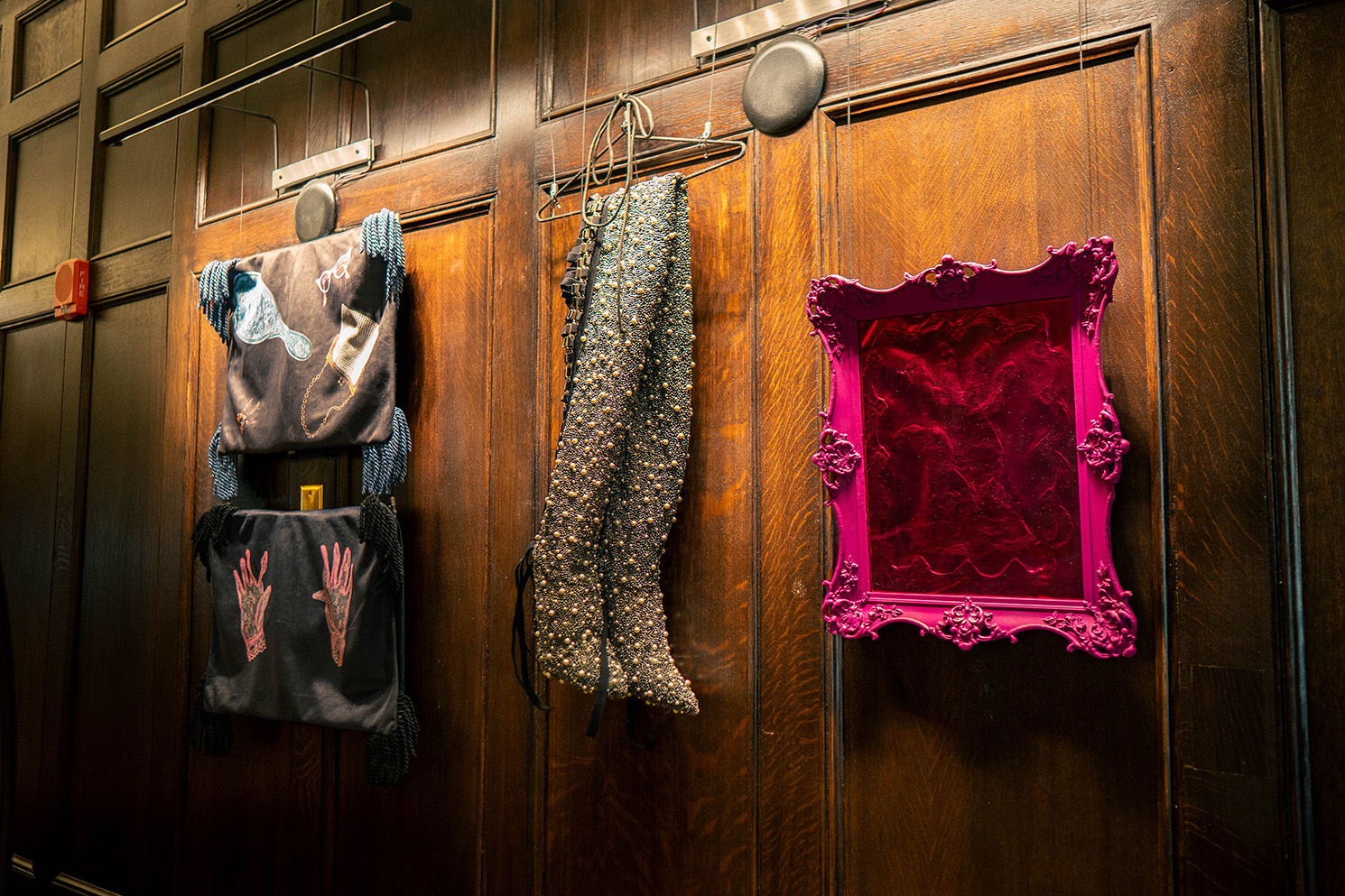
- Michael Drummond, Pillow series, 2024-2026; It’s complicated, 2026; 1432 for Heather, 2026. Images courtesy of the artist
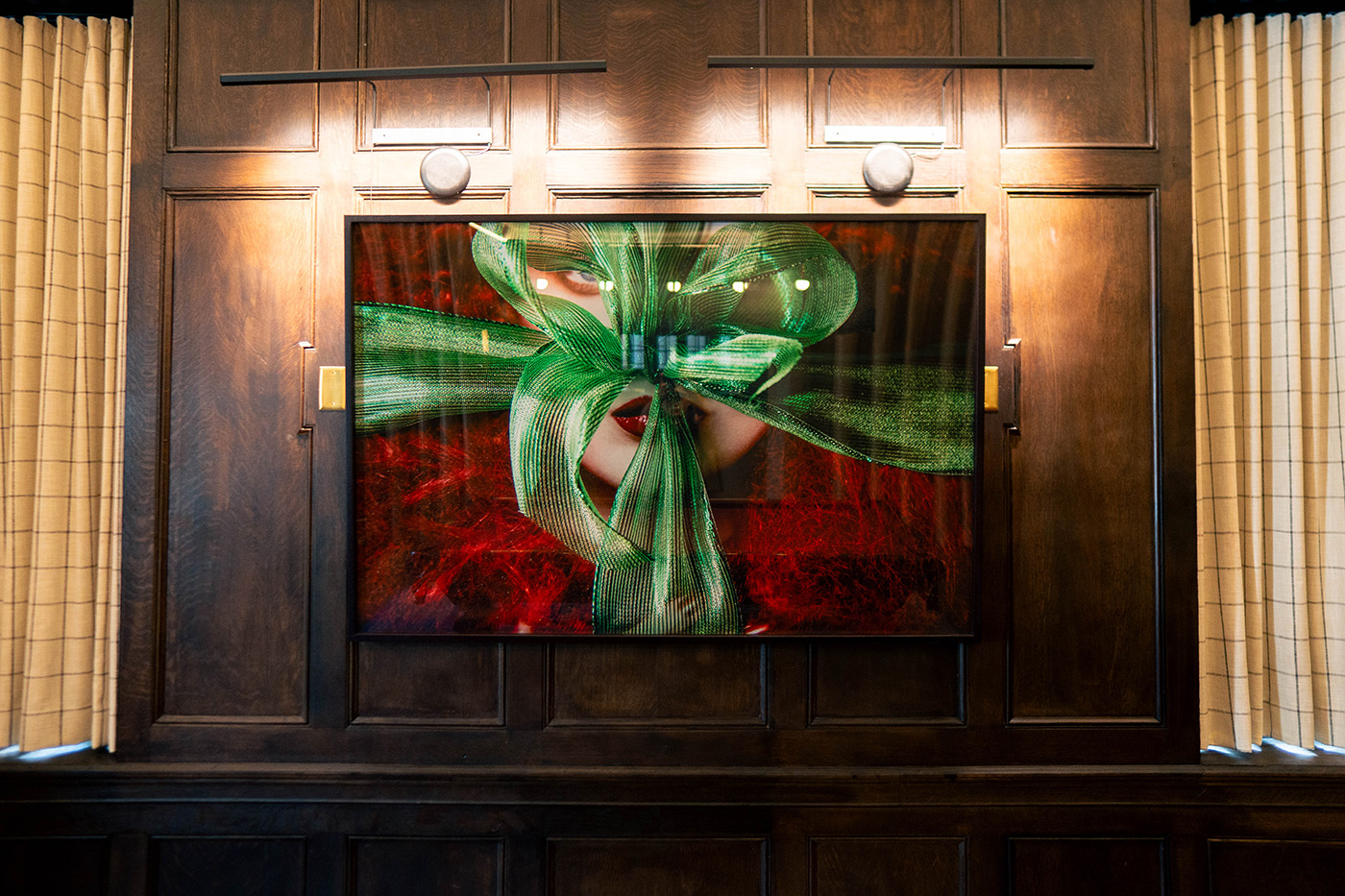
- Heather Bennett, The Loved One, 2016. Image courtesy of the artist and Bruno David Gallery
About the Exhibition
St Louis, On View Through December 2026
Elevate at 21c showcases the work of artists in St. Louis and the central Mississippi River region, highlighting the range and depth of visual culture in this dynamic, ever-changing area.
Heather Bennett and Michael Drummond each create artworks filled with mystery, revealing glimpses of the subjects or wearers, while also masking them, sometimes folded out of sight or covered in fabric or bows, making them implicitly seductive. The artists reveal glimpses of human subjects but these are flattened images from magazines or lit in otherworldly, shadowy ways. By focusing on items that surround each subject, human form is objectified, as it often is in fashion or photography. It is through our imagination that the narrative shifts to the gift giver, the wearer of the clothing, the blurry subject in the mirror–the human behind the object. The viewer is layered into the images through mirrors and reflective surfaces. The artists combine real life with mirror-like objects that are reflective and opaque at the same time. Similar to the subjects of the image, the viewer is layered and complicated.
Many of the artworks by Drummond explore fashion through the lens of chess strategy, post-apocalyptic and futuristic films, and the environmental impacts of fashion. His reference to film through fashion connect these images into our daily life, using a language of cultural reference to build the implied storyline of choices and strategy to avert climate catastrophe. But these objects become something other than their original purpose, like Bennett’s use of photographs to wrap gifts before again becoming the subject of a photograph. She explains, “[p]hotographic images have traditionally depicted space, revealing our world. They are the stuff of illusion and yet are also things. At the intersection is a kind of gooey vacillation as we look at and through a photographic image in contemporary culture.” In reconsidering purpose and expectation, the artists create a new narrative.
All artworks courtesy of the Artists and Heather Bennett courtesy of Bruno David Gallery.
Heather Bennett
Heather Bennett’s Fairest series is made up of photographs of seemingly empty frames which look like mirrors yet are opaque; the artist’s image appears but is blurred and unintelligible. The viewer’s image also appears in the image as a reflection in the glass as a sign of empathy and identification, merging author with viewer.
Bennett explains, “previously, I was interested in collapsing the subject (artist/author) with the object (objectified body) and this work does that more subtly while also inviting the viewer with magnanimity. Here I consider authorship beyond binary; not just who has access to it and who doesn’t, but when does a bit of abdication and collaboration increase its power. In collaboration with the viewer/ reader, and other artists/ writers/ authors there is a different kind of subjecthood we can access collectively. The installation of the empty frame images varyingly reflecting each other is a hint at this inter-relationship, a give and take, a productive circularity. Fairest articulates an exchange visually, though cryptically, and asks the viewer to join with a bit of gothic playfulness.”
As described by the artist: “Photos of Gifts seems to bluntly describe what is depicted. However, these gifts are wrapped with magazine photos complicating illusionistic space while prolonging the reveal, hinting at a transition rather than capturing a past. The photograph as arguable object is conflated in these works with the history of the representation of woman as object in photography and film. Women acting as objects for magazine advertisements are transformed into focused subjects only to be simultaneously flattened, their images wrapped around a box and tied with a bow, inextricable from the object portrait. A lovely package, ribbons and bows, decoration, frivolity, all, traditionally, have been somewhat the province of the feminine.’
‘…The small act of wrapping a gift becomes a potent metaphor, exploding within its supposedly quiet, often assumed to be feminine space. The act of giving, of taking care is often denigrated as background, reflecting the necessity but inconspicuousness of the caregiver. The act of care here denies its demotion. Titles gesture to a new destination, highlighting the coming transition and its brevity, they are also diaristic, ousting the recipient and emphasizing the gift. A gift intended to be given. The object is relinquished, bathed in an elaborate ritual and transferred with devotion to someone for whom it was chosen.”
Michael Drummond
Originally included in the exhibition Being Played: Michael Drummond at the World Chess Hall of Fame, the artwork entitled …Bh3! expresses the moment near the end of a chess match. The artist describes the scene: “…we see our player in red speaking in varied negotiating tactics. Mirroring and labeling are used to grab the attention of the other player. ‘It looks like you are finished playing games’ is etched onto a red reflective surface, calling to mind that last wardrobe check in the mirror before leaving the house or convincing a terrorist to evacuate a building.”
A fashion designer and artist, Michael Drummond makes wearable artworks intended to work in daily life. The artist thoughtfully considers sustainability through materials and the ways that the object evolves with wear. Drummond says, “clothing is a language spoken through movement, texture, and the wearer. My favorite pieces adapt: a blouse that can be washed in a hotel sink and ready by evening, a dress that moves from workspace to dinner without asking for attention but always getting it. Clothes that feel purposeful, wear well over time, and fit effortlessly into life.” In these works, fashion plays a role, but the artworks construct an identity: photographs of classical art objects and iconic fashion objects are transposed onto fabrics and framed with fringe; thigh high boots endlessly interconnected, are now an unwearable object only to be admired; lace gloves encased in metallic, pink vinyl are framed as an artifact. The artist builds a narrative of the mysterious wearer, palpably absent. Who wears this combination of accessories? What other niceties surround them? What is their destination in life?
Originally included in the exhibition Being Played: Michael Drummond at the World Chess Hall of Fame, artworks in this series are named with the algebraic notation of a chess move, building layers of meaning which can be experienced at various depths. Inspired by the chess game played between Dr. Frank Poole and the computer HAL 9000 in Stanley Kubrick’s 2001: A Space Odyssey, the artist uses a game against an omnipotent, but unreliable adversary in a post-apocalyptic future as a metaphor for the effects of the fashion industry on the earth, and our battle against a changing climate. In an essay about the Being Played exhibition, Sarah Stallmann explains, “A player (in this case, our “predator”) who has all of the strategy and resources of an actual supercomputer, vs. Man, or us as a people who are trying to navigate and strategize our moves for the future, despite being in the midst of a game with an unfairly advantaged opponent.”