Elevate: Jean Schmitt
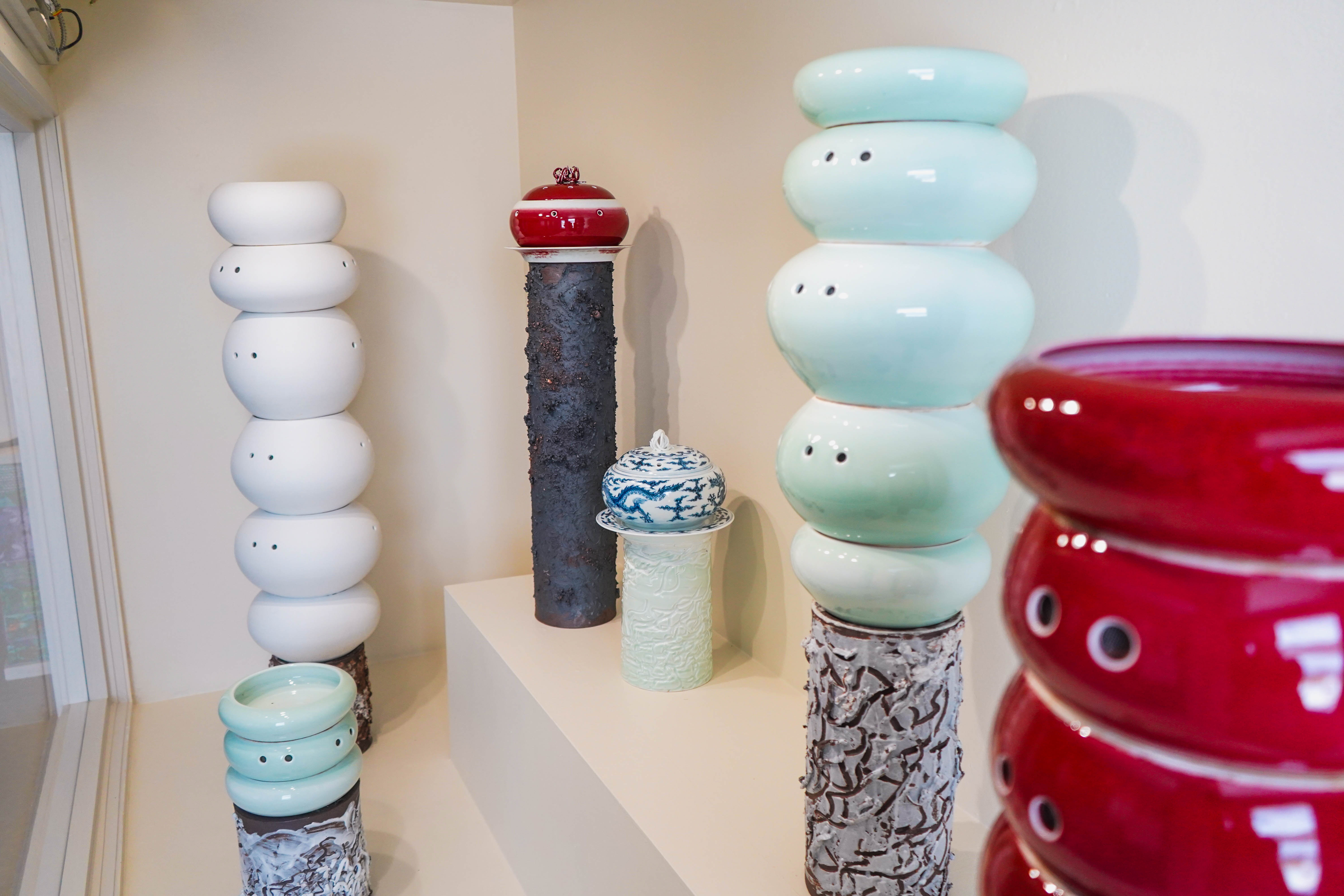
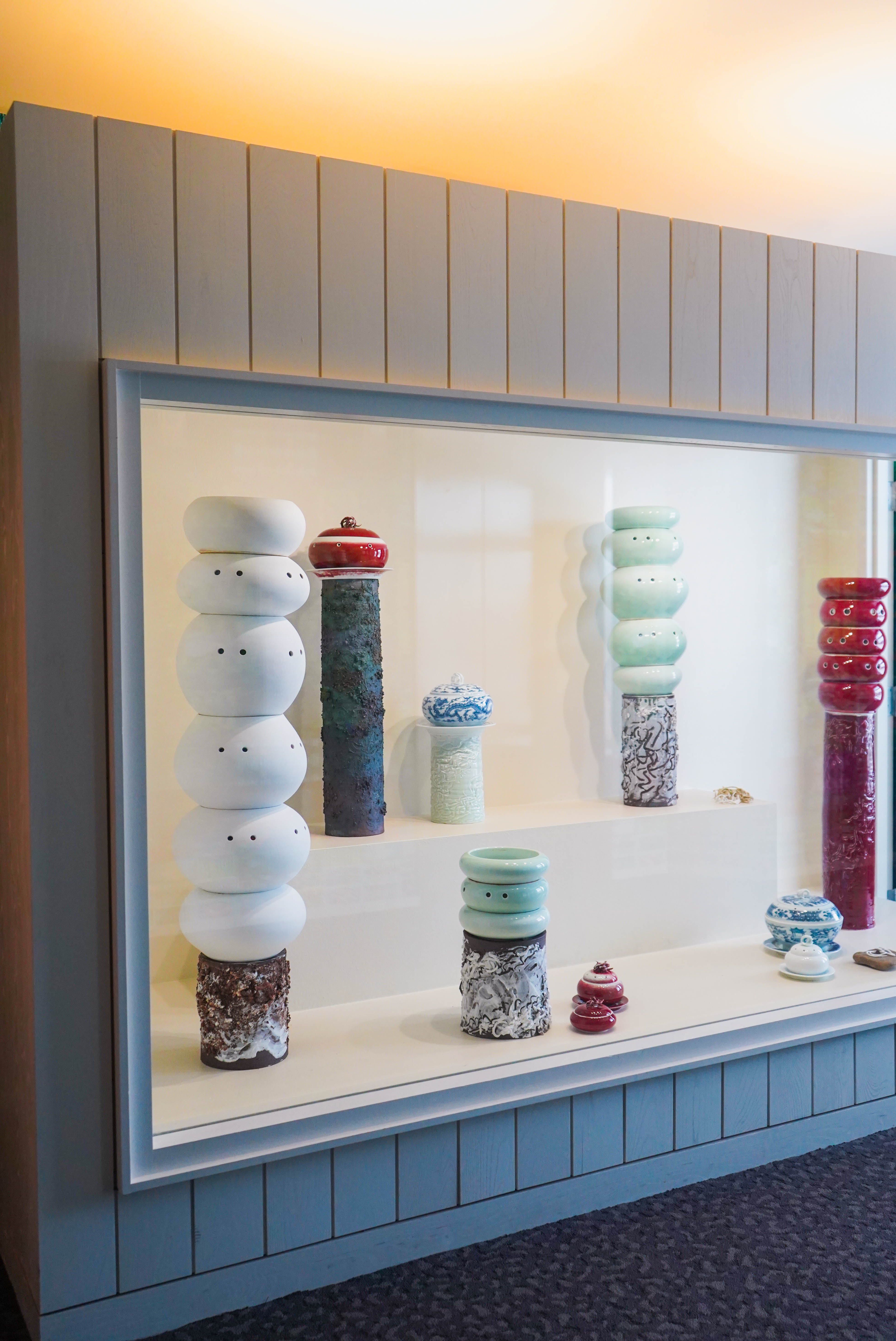
- Above and Below, 2026, Installation includes handmade porcelain worm tureens
- Above and Below, 2026, Installation includes handmade porcelain worm tureens
About the Artist
Bentonville, On View on Hotel Guest Floors
Elevate at 21c presents temporary exhibitions of works by artists living and working in the Northwest Arkansas community.
The program provides hotel guests and visitors with unique access to the work of notable regional artists, while featuring their work in the context of 21c’s contemporary art space.
Bio: Jean Schmitt is a multimedia artist and educator based in Fayetteville, Arkansas, and Assistant Professor in the School of Art at the University of Arkansas. Her work spans living sculptural systems, drawing, installation, moving image, and sound, with sustained attention to decomposition, soil-making, plants, worms, vultures, and other ecological relationships.
Her work has been exhibited recently at the Institut Henri Poincaré in Paris, the Taoxichuan Glass Studio Gallery in Jingdezhen, China, and Leedy-Voulkos Art Center in Kansas City, with additional exhibitions in Boston, Madrid, Quito, and Cuenca. She frequently works collaboratively with artists, scientists, mathematicians, and other researchers.
Schmitt is co-founder of the Prairie Pedagogy Research Group at the University of Arkansas, an interdisciplinary project based at Oak Knoll that brings artists, scientists, students, and Indigenous collaborators into relationship with a remnant tallgrass prairie and oak savanna ecosystem.
Statement: My work begins with soil: feeding kitchen scraps to composting worms, looking at vermicompost under the microscope, and watching roots, fungi, microbes, and worms carry out their work underground. The Worm Tureen series grew from this daily practice.
The forms reimagine the porcelain soup tureen as a living sculptural system. Developed with ceramicists in Jingdezhen, they are built as stacking chambers for worms, compost, soil, and plants. Handles, feet, lids, painted surfaces, and ornamental forms remain visible, while the vessels also become columns, habitats, and structures for decomposition and growth.
I am interested in what happens above and below the surfaces we ordinarily notice. Worms transform kitchen scraps into soil. Roots and fungi exchange nutrients underground. Vultures circle high overhead, moving through rising air. Across my work, these different scales and species become ways of following material as it moves, changes, and enters another form.