After Precarity
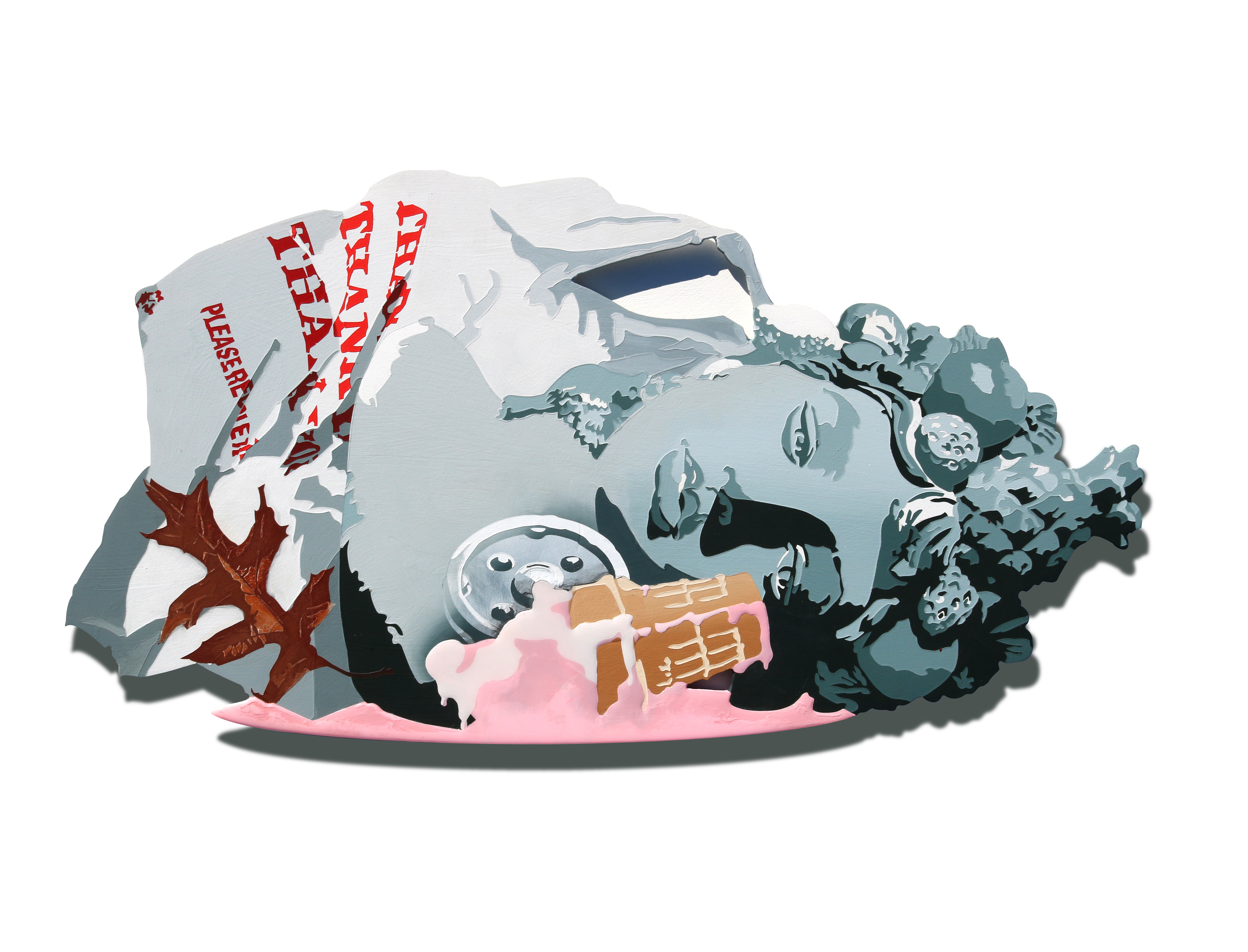
- Lori Larusso, Sidewalk Still Life
About the Exhibition
Louisville, On View Through May 2026
“To live with precarity requires more than railing at those who put us here…we might look around to notice this strange new world, and we might stretch our imaginations to grasp its contours,” – Anna Lowenhaupt Tsing, The Mushroom at the End of the World (2015)
Louisville-based artists Mitch Eckert, Albertus Gorman, Lori Larusso, and Tom Pfannerstill each find their muse, and often their material of choice, to be the discarded articles of consumer goods found in trash receptacles, along riverbanks, and on roadsides. These artists engage the refuse they encounter as both a readymade and something in need of being remade. Whether crafting reproductions (Larusso and Pfannerstill) or working with found objects (Gorman and Eckert), all four artists reimagine the abandoned commodities they confront.
The work of these contemporary creators harkens back to the 1960s when Assemblage and Pop artists began displaying commercial goods in galleries, placing an importance on image over use value. Whether reassigning the product or recreating it, this art highlighted the increasing precarity ushered in by the 20th century’s competitive manufacturing and race for technological advancements. Pfannerstill, Larusso, Gorman, and Eckert all reimagine the practice their predecessors in the ’60s formalized. If Pop and Assemblage artists sought to display precarity in their reproduction of a commercial object’s initial state, the artists in After Precarity are, as the title insinuates, representing these objects’ final state—after they have been used, tossed out, flattened, forgotten, rusted, and fallen.
Precarity is a state of being. It is also something to be observed. It is balancing, it is toppling, it indicates a future action all while it is continuously occurring. Like boulders that balance on the edge of hilltops, individuals for whom the circumstances of their lives leave them susceptible to interference live in a state of precarity, their security constantly under threat from forces outside their control. Discussing environmental change, irreversible human interference, and nuclear disaster, anthropologist Anna Lowenhaupt Tsing writes, “Precarity once seemed the fate of the less fortunate. Now it seems that all our lives are precarious.”
While there is much unknown in this new stage of universal precarity, the works in After Precarity remind us that there remains opportunity and hope for an individual or object’s fate to be reimagined, even when it seems they have reached the end of their story.