Elevate: Cody Norton
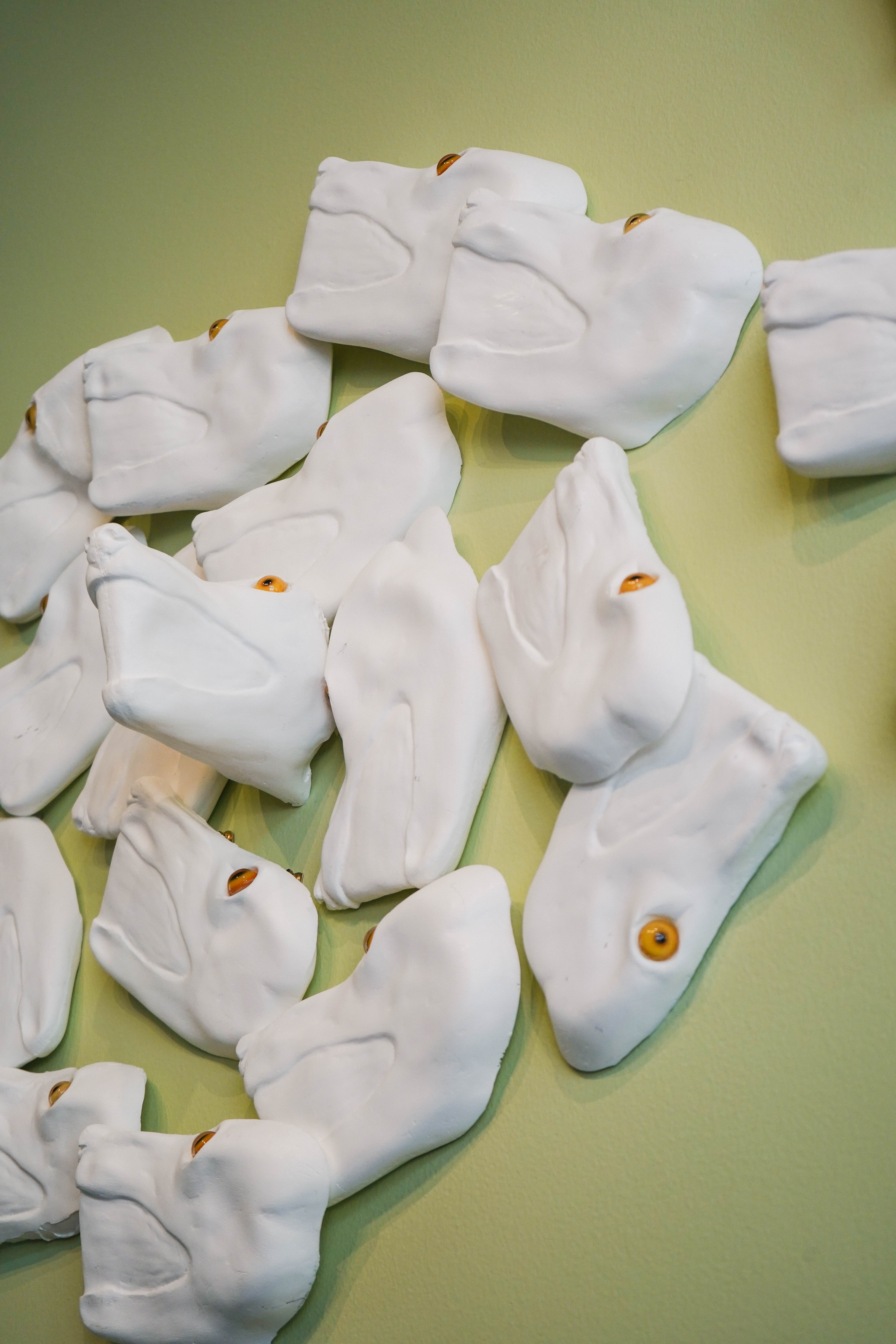
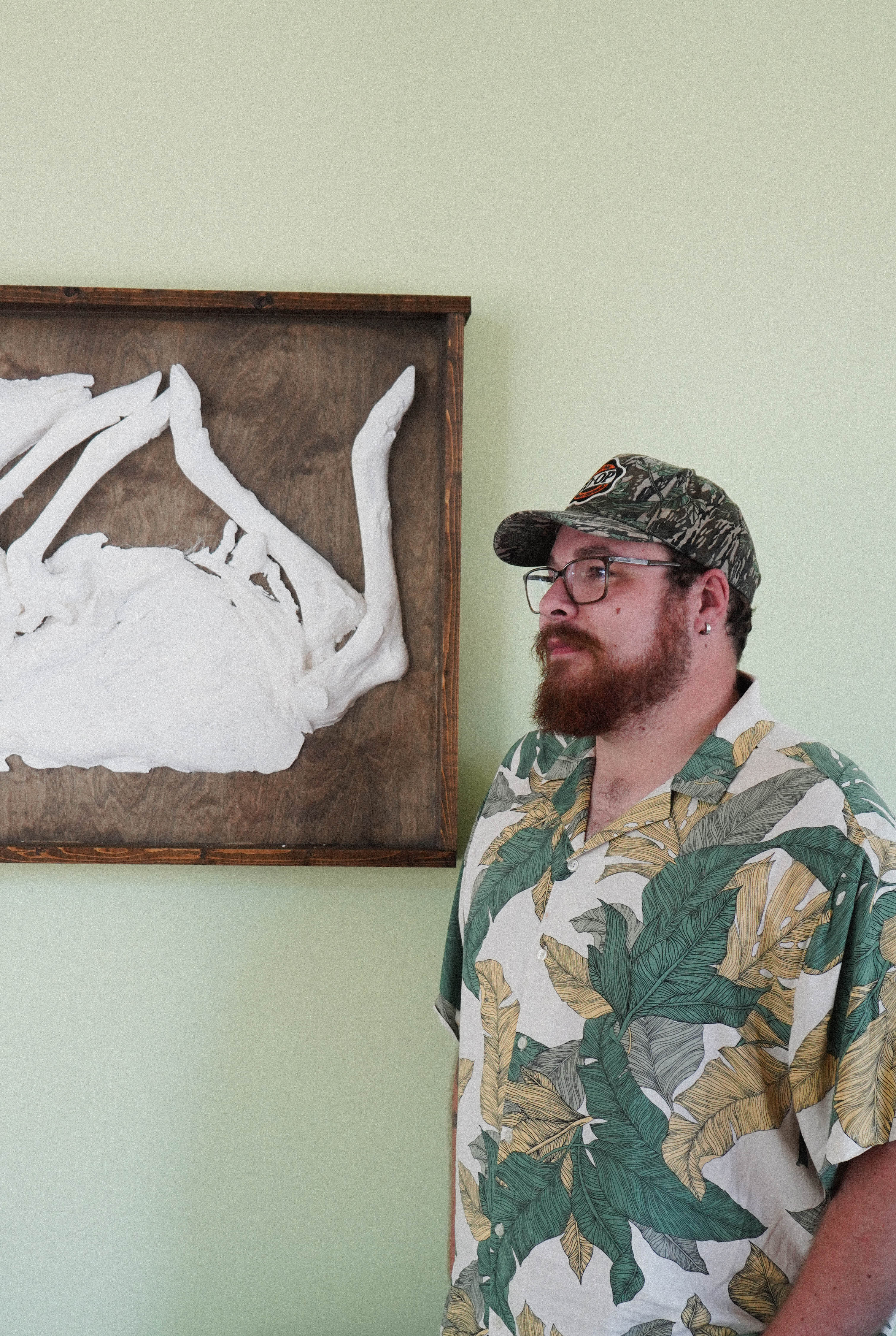
- Aphonia, 2026
Liquid plastic, wood, taxidermy glass eyes - Cody Norton with
Do You Feel This Pressure, 2026
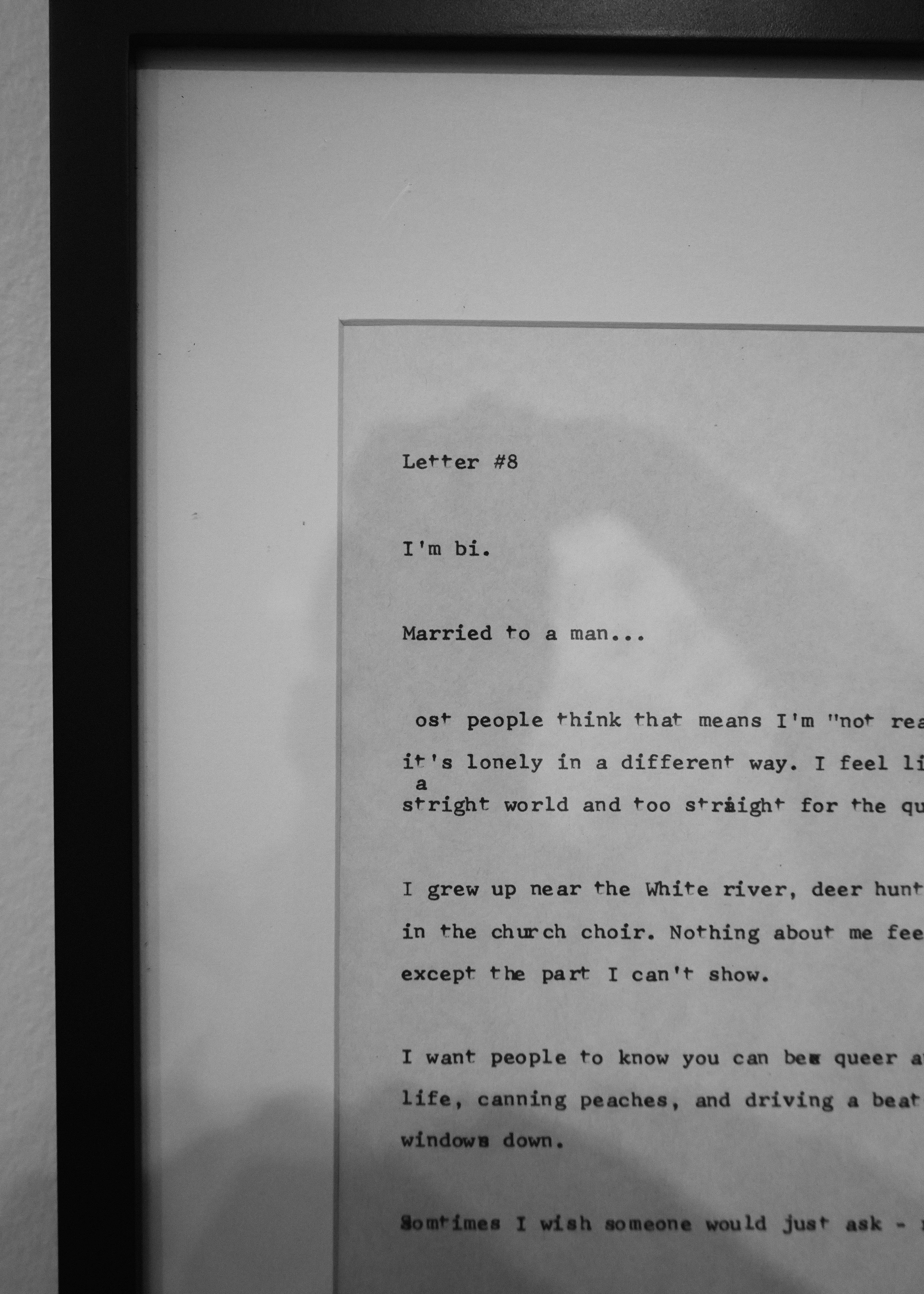
Liquid plastic, wood, glass - In Care Of: Cord, Arkansas, 2026
Typed letters - See No Evil, 2026
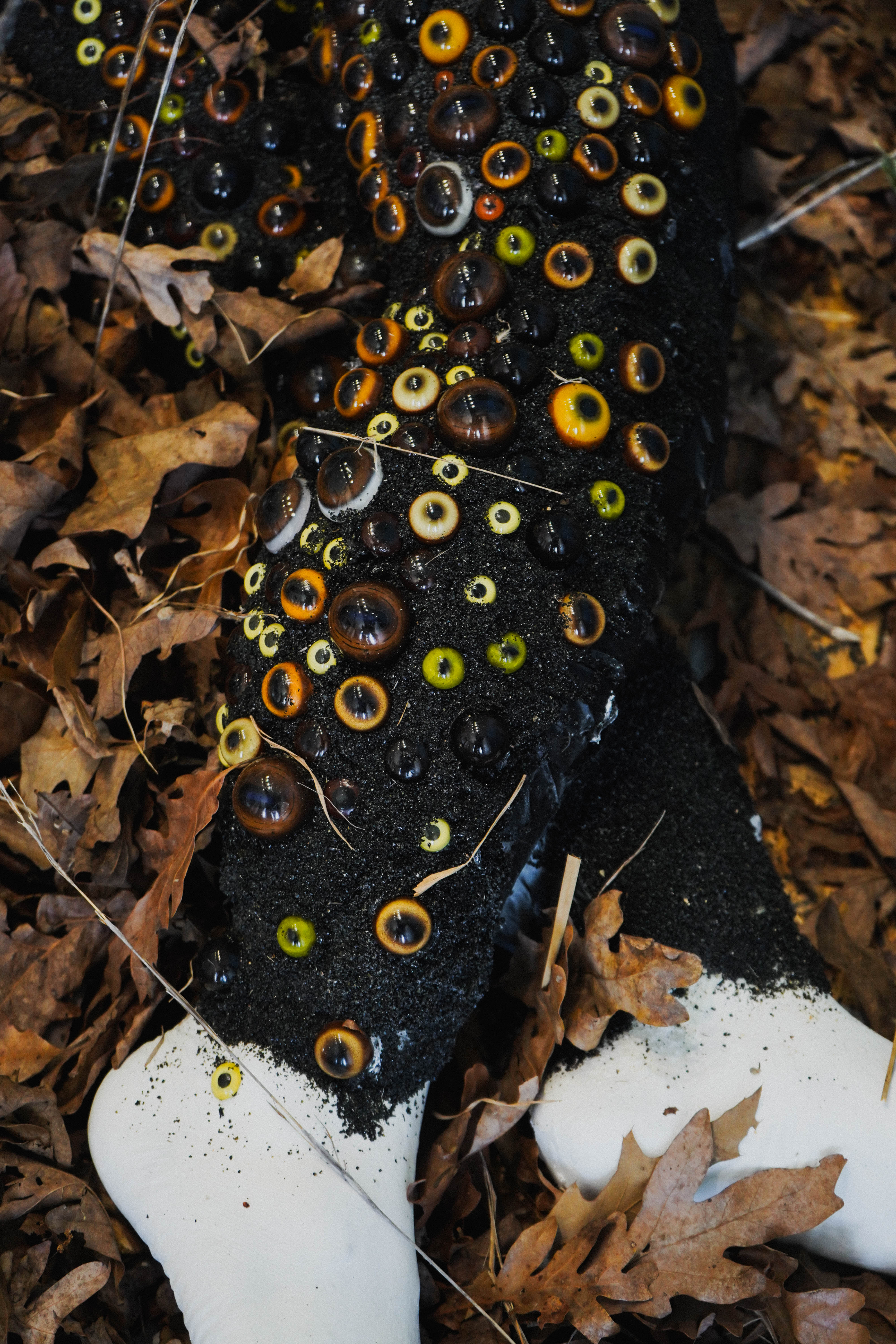
Sculpted body, glass eyes, native Arkansas vegetation - See No Evil, 2026
Sculpted body, glass eyes, native Arkansas vegetation - Do You Feel This Pressure, 2026
Liquid plastic, wood, glass
About the Artist
Bentonville, On View on Hotel Guest Floors
Elevate at 21c presents temporary exhibitions of works by artists living and working in the Northwest Arkansas community.
The program provides hotel guests and visitors with unique access to the work of notable regional artists, while featuring their work in the context of 21c’s contemporary art space.
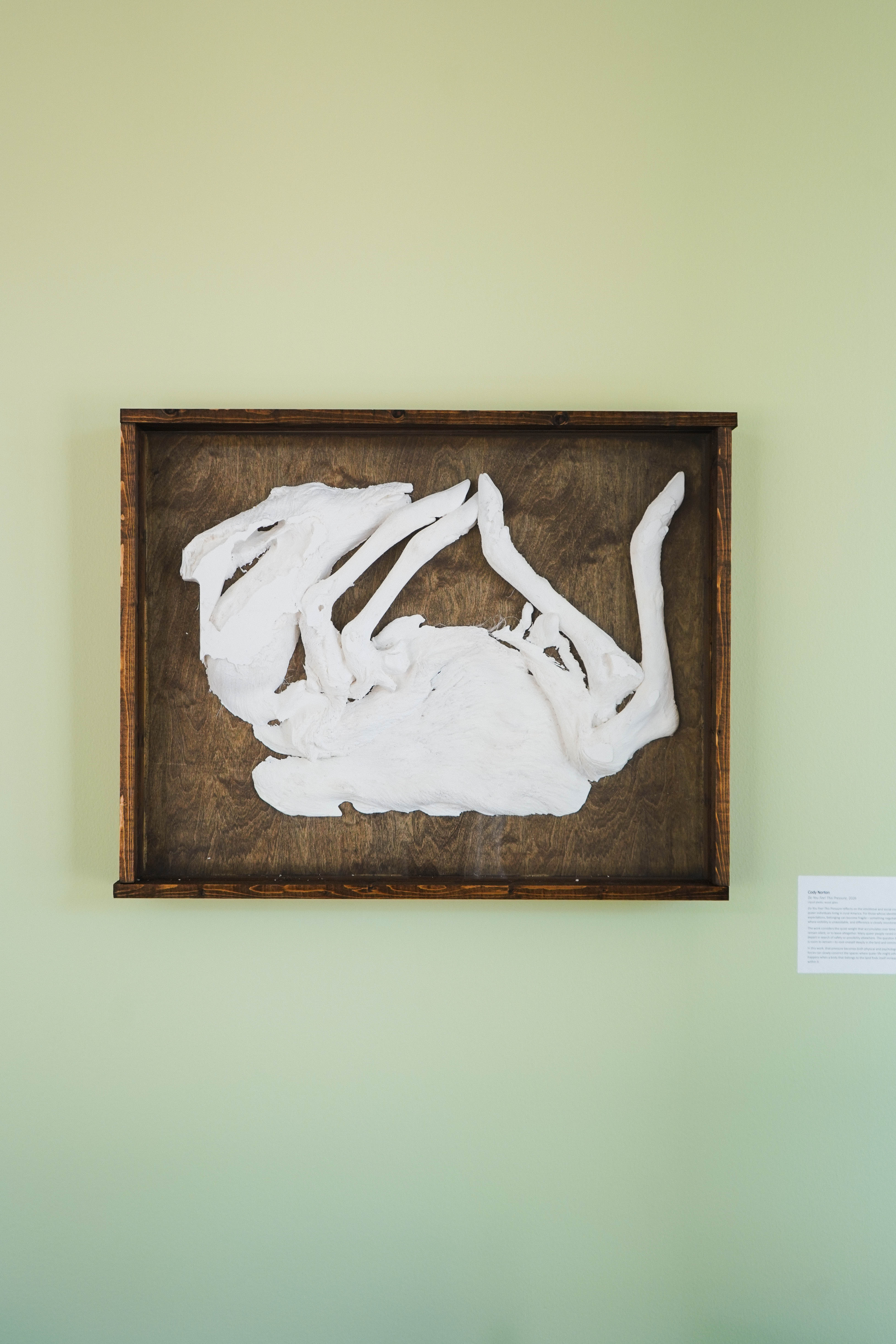
Do You Feel This Pressure, 2026
Do You Feel This Pressure reflects on the emotional and social compression experienced by queer individuals living in rural America. For those whose identities fall outside dominant expectations, belonging can become fragile—something negotiated daily within communities where visibility is unavoidable, and difference is closely monitored.
The work considers the quiet weight that accumulates over time: the pressure to conform, to remain silent, or to leave altogether. Many queer people raised in rural spaces ultimately depart in search of safety or possibility elsewhere. The question that lingers is whether there is room to remain—to root oneself deeply in the land and community one calls home.
In this work, that pressure becomes both physical and psychological, suggesting how social forces can slowly constrict the spaces where queer life might otherwise grow. It asks what happens when a body that belongs to the land finds itself increasingly unable to breathe within it.
Aphonia, 2026
Aphonia takes its title from a medical condition in which the voice is lost or rendered silent. The work reflects on the erasure and silencing of queer presence within rural communities—those who remain and those who have disappeared from these landscapes over time.
In rural America, voices that challenge dominant social structures have often been silenced by social pressure, exclusion, or the need to leave. What remains are traces—lives once lived within these landscapes but no longer visible within them.
The work draws upon the figure of the coyote, an animal historically treated as vermin and relentlessly targeted for eradication. Yet despite constant persecution, the coyote persists. Within this tension between survival and hostility, the work reflects on queer existence in rural space: bodies that endure, adapt, and remain present even when rendered unwelcome.
Aphonia considers what it means to exist within a culture that attempts to silence certain voices, asking how presence continues even when speech is denied.
In Care Of: Cord, Arkansas, 2026
In Care Of: Cord, Arkansas is an ongoing, living archive centered on queer life in the rural Arkansas Ozarks. The project gathers letters from queer individuals through a localized, consent-based process. Invitations to participate are left only at homes and businesses displaying pride flags—sites where queerness has already chosen visibility within a landscape, where such visibility is never neutral. Letters arrive by mail to a post office box in Cord, Arkansas, often anonymously, and frequently through informal networks of friends, acquaintances, and chosen kin.
Each letter, whether handwritten or typed, is carefully re-typed by the artist on a manual typewriter. This act of transcription functions as custodial labor rather than authorship, preserving content while removing handwriting as a form of biometric exposure. The resulting documents are framed and exhibited as a growing archive, emphasizing care, delay, and attention over immediacy or extraction.
Rather than presenting testimony as evidence or spectacle, In Care Of: Cord, Arkansas foregrounds relational knowledge—what can be shared, what must remain partial, and what it means to be received. The project understands rural queer experience not as singular or static, but as an ongoing negotiation with place, risk, memory, and survival.
In care of (c/o): A postal designation used when mail is sent to someone who will receive, hold, and responsibly pass it along, without claiming full ownership.
See No Evil
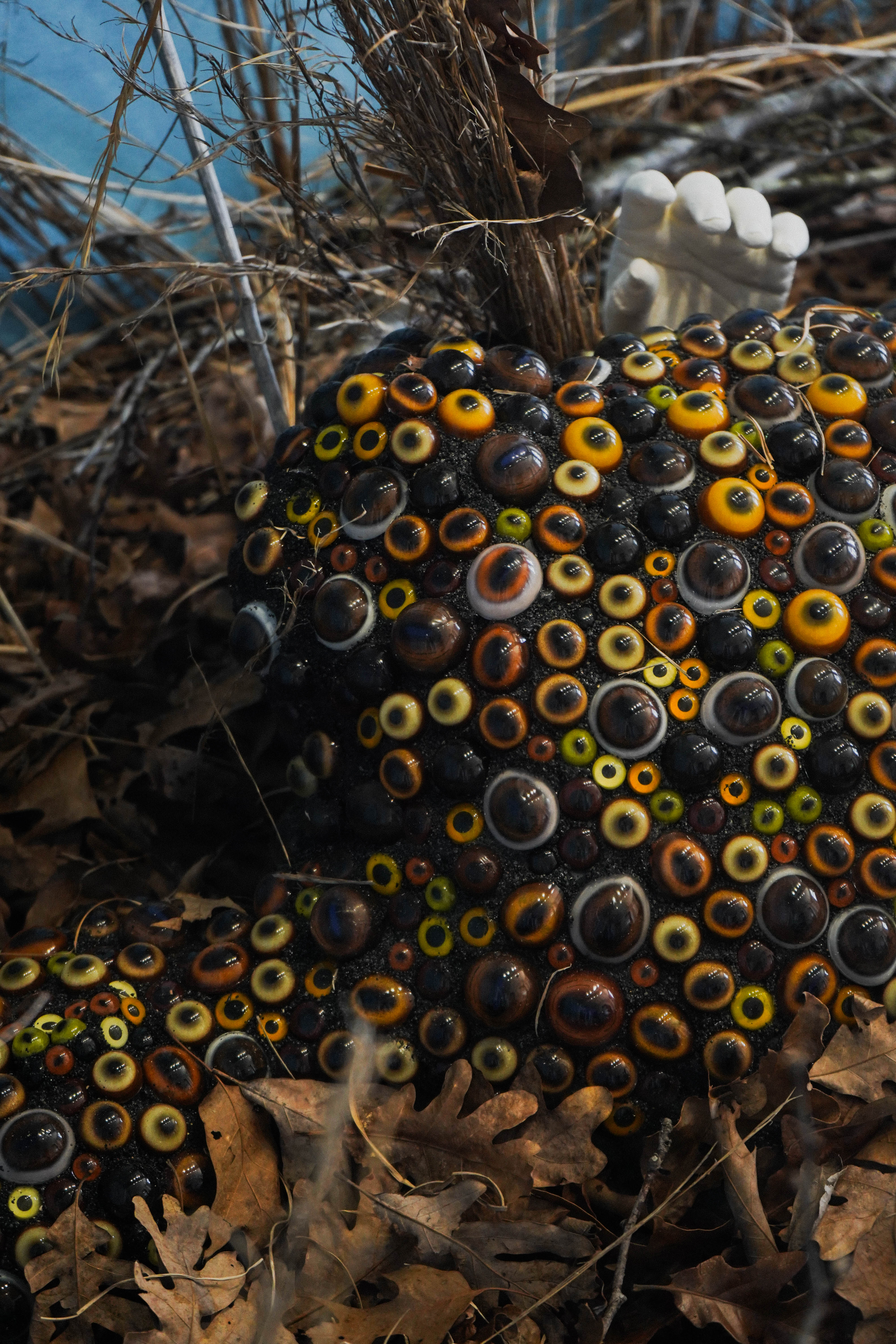
See No Evil considers the psychological weight of visibility within rural America. In places where communities are small and social boundaries are tightly drawn, difference is rarely allowed anonymity. For many queer individuals, identity becomes something that cannot quietly exist; it is sensed, measured, and continually returned through the gaze of others.
The work reflects on this condition of perpetual observation and the way it settles into the body. To live under constant scrutiny is to internalize that gaze, carrying it within oneself even in moments of solitude. What begins as external attention becomes a lingering presence—an awareness that one’s body is never entirely unwatched. The taxidermy eyes reference both the culture of hunting and the aesthetics of preserved animal bodies, situating the queer figure within a visual language historically associated with rural masculinity and the hunted body.
Drawing from the cultural language of rural life, the work situates queer experience within the same landscapes that often claim to exclude it. It acknowledges a deep attachment to these places while confronting the social structures that shape how bodies are seen within them. In this space between belonging and exposure, the work asks what it means to inhabit a place that one loves, while never fully escaping the feeling of being watched.
The fetal position suggests both vulnerability and protection. While the figure curls inward as if seeking refuge, the eyes covering its surface make invisibility impossible. In this way, the sculpture embodies the tension between belonging to the rural landscape and feeling exposed within it.
About the Artist: Cody Norton
Cody Norton is an Elgin, Texas-born artist and Assistant Professor of Art at Lyon College in Batesville, Arkansas. He earned his BFA in Painting and Drawing from the University of North Texas and his MFA in Sculpture and Post-Studio Practice from the University of Colorado Boulder. Norton’s work explores rural queer experience, environmental concerns, and the intersections of field-based research and contemporary art practice.
He has exhibited nationally and internationally in cities including London, New York, Toronto, Glasgow, São Paulo, Dallas, Austin, San Antonio, Denver, and Boulder. Notable exhibitions include RUINS: Performing Queer History (Union Hall, Denver – forthcoming East WindowGallery, Boulder), the Mountain Plains Contemporary Arts Biennale (Selina Arts Center), and Reel Queer Film Festival (Little Rock – selected Best Arkansas Short Film). He is currently represented by Liliana Bloch Gallery in Dallas, Texas.